
 As a Doctor in Clinical Psychology who works with creatives, I’m not interested in labeling symptoms and more interested in understanding lived experience and the deeper roots of struggle. That said, there are times when identifying common symptoms can be helpful – not to pathologize, but to recognize when something meaningful is asking for attention.
Creative burnout often shows up quietly, over time – like a shadow that gradually spreads, unnoticed until you realize how much it has taken over.
The ideas are still there, but the energy to bring them to life feels diminished or gone. Creating begins to feel heavy instead of meaningful and inspiring.
The confusion can be painful. Working harder doesn’t help. Rest doesn’t seem to restore what’s missing. What once felt like expression starts to feel like pressure.
Creative burnout symptoms develop under ongoing demands, perfectionism, and the expectation to keep producing without pause. Over time, passion turns into depletion, leaving people questioning their creativity rather than the conditions surrounding it.
Many creatives push through these challenges because their work is tied to their identity, meaning, and livelihood, making it harder to step back when strain begins to build.
As a therapist who works closely with creatives, I see this pattern often. This post looks at creative burnout symptoms, what causes them, and what supports recovery, so you can better understand what your system may be asking for and begin to move toward steadier ground.
What Is Creative Burnout?
Creative burnout is more than a difficult week or a temporary creative block. It is a state of emotional, physical, and creative depletion that develops when meaningful work continues under sustained pressure without enough recovery.
The symptoms tend to linger beyond the work itself. Concentration fades, decision-making feels heavier, and creative effort requires far more energy than it once did. This is one of the key differences between burnout and creative block. Burnout carries exhaustion, not emptiness.
Ongoing demands such as deadlines, financial pressure, constant feedback, and visibility can slowly erode a sense of internal steadiness. Over time, the nervous system stays in a state of effort, making rest less restorative and creativity harder to access.
Creative burnout is not a personal failure or lack of discipline. It reflects strain within the conditions surrounding creative work. Naming it clearly often brings relief and creates space for boundaries, recovery, and a more sustainable relationship with creativity.
The Psychological Creative Burnout Symptoms
 Psychological creative burnout symptoms often develop gradually and can be easy to dismiss at first.
Common signs include:
- Persistent self-doubt. Even experienced creatives begin questioning their ability, despite past successes.
- Irritability or emotional withdrawal. Small frustrations feel heavier, and connection with others may take more effort.
- Loss of enthusiasm or meaning. Projects that once felt engaging begin to feel hollow or purely transactional.
- Morning dread around creative work. A sense of heaviness or resistance appears at the start of the day.
- Heightened perfectionism and comparison. Standards become harder to meet, and measuring yourself against others fuels self-criticism.
These responses are not signs of weakness or lack of commitment. They reflect emotional systems under prolonged strain and often signal a need for rest, boundaries, and recalibration.
Physical and Cognitive Creative Burnout Symptoms
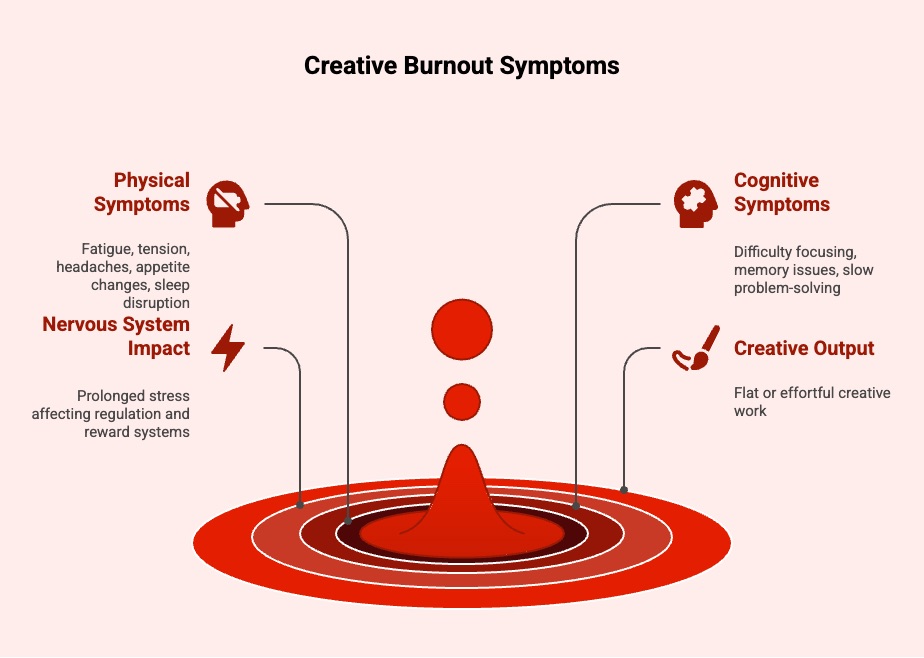 Creative burnout symptoms often show up in the body first. Fatigue lingers even after rest, and the body feels tense or depleted in ways that sleep alone does not resolve. Headaches, muscle tightness, appetite changes, and disrupted sleep are common signals.
Cognitively, focus becomes harder to sustain. Attention drifts, memory feels unreliable, and tasks that once felt intuitive now require more effort. Problem-solving can feel slower, and creative decisions may feel surprisingly taxing.
These changes are linked to prolonged stress on the nervous system. When the brain remains in a state of effort for too long, regulation and reward systems are affected. As a result, creating can feel flat or effortful rather than engaging.
This does not reflect a loss of ability. It reflects a system that has been carrying too much for too long. Physical symptoms are not interruptions to creativity. They are messages asking for care, pacing, and recovery. Listening to them early helps protect both health and creative capacity.
Behavioral Creative Burnout Symptoms to Notice
Behavioral creative burnout symptoms often show up in day-to-day habits and patterns. Common signs include:
- Persistent procrastination. Tasks are delayed repeatedly, even when ideas and intentions are present.
- Increased passive consumption. Scrolling, watching, or seeking inspiration replaces active creating.
- Doing only what feels necessary. Paid or deadline-driven work continues, while personal or exploratory projects fade.
- Avoidance disguised as preparation. Time is spent organizing, researching, or “getting ready,” without starting.
- Heightened comparison and withdrawal. Seeing others’ work triggers hesitation, self-doubt, or disengagement.
- Loss of playfulness. Creativity feels transactional, driven by pressure rather than curiosity.
Main Causes of Creative Burnout Symptoms
Burnout usually develops over time, shaped by the conditions surrounding creative work rather than a single failing.
Sustained output without meaningful pauses is a common contributor. When creativity is treated as something that must always be available, fatigue builds quietly. Over time, the nervous system stays in a state of effort, making recovery harder even when work slows.
Blurred boundaries also contribute. Working from home, flexible schedules, and constant access to devices can erase clear stopping points. Without protected time away from creative demands, the system never fully resets.
Perfectionism and comparison can intensify this strain. High internal standards, combined with ongoing exposure to others’ work, can create a sense that rest must be earned or delayed. This keeps many creatives pushing past their limits.
Naming these pressures clearly helps shift the focus from self-blame to more realistic, compassionate ways of working and recovering.
 Recovery from Creative Burnout Symptoms
Recovery from creative burnout symptoms takes time, and the timeline varies. Milder burnout often begins to ease with intentional rest and reduced demands, while deeper burnout may require longer recovery and therapeutic support. Progress is not linear, and improvement often comes in phases rather than all at once.
Needing time for recovery does not mean creativity is lost – it means it has been overextended without enough support and time to recharge.
Recovery usually begins with recognition. Naming burnout allows the nervous system to stop pushing against itself. From there, rest becomes meaningful, emotional responses can be processed, and boundaries slowly take shape around work and creative effort.
Gentle changes tend to support healing more than drastic ones. Reducing exposure, shifting environments, turning to low-pressure creative play, and reconnecting with earlier sources of meaning can help creativity feel accessible again. Therapy for creatives often plays an important role as well.
Sustainable recovery focuses on prevention as much as relief. Clear limits, regular pauses, and ongoing self-care help protect creative energy over time. Creative capacity returns most reliably when it is supported rather than forced.
 When Creativity Needs Care
Creative burnout symptoms are not a sign that something is wrong with you or your work. They are signals that your nervous system has been under sustained strain and is asking for a different pace. When these signals are acknowledged rather than pushed through, they often lead to clearer boundaries and steadier ground.
Recovery is rarely about forcing creativity to return. It comes from allowing rest to be restorative again, letting pressure ease, and creating conditions where energy can rebuild naturally. Over time, creative burnout symptoms tend to soften when care replaces urgency.
If creative burnout symptoms resonate and you would like support in understanding what your nervous system may need right now, you’re welcome to reach out and contact me today.
Frequently Asked Questions
What are the most common creative burnout symptoms?
Creative burnout symptoms often include emotional exhaustion, loss of motivation, persistent self-doubt, difficulty focusing, and a sense of heaviness around creative work. Ideas may still be present, but the energy to act on them feels limited. These symptoms usually develop gradually rather than appearing all at once.
How is creative burnout different from creative block?
Creative block typically involves a lack of ideas or inspiration. Creative burnout symptoms are different because ideas remain, but the nervous system feels depleted. Creating requires more effort, recovery takes longer, and motivation feels strained. Burnout reflects exhaustion, not emptiness or lack of imagination.
Can creative burnout symptoms affect physical health?
Yes. Creative burnout symptoms often show up physically through ongoing fatigue, disrupted sleep, muscle tension, headaches, and changes in appetite. These signals reflect prolonged stress on the nervous system. When ignored, physical symptoms can intensify, making both creative work and daily functioning more difficult over time.
How long does it take to recover from creative burnout?
Recovery timelines vary. Mild creative burnout symptoms may ease with rest and reduced demands, while deeper burnout often requires longer recovery and support. Improvement usually happens in phases rather than all at once. Patience, boundaries, and nervous system care tend to support more sustainable recovery.
Should I seek professional support for creative burnout?
Professional support can be helpful when creative burnout symptoms persist or begin affecting daily life. Therapy offers space to understand contributing factors, regulate stress responses, and rebuild boundaries. Support is not about fixing creativity, but about helping the system recover so creative capacity can return naturally.

